Outcomes

Impact of Our Work

ESG Statistics

Snapshot of Our ESG Impact and Achievements

ESG statistics, which stand for Environmental, Social, and Governance, in Australia provide a snapshot of a company's ethical and sustainable practices. These metrics cover environmental impact, social responsibility, and governance. Ideal for consumers and the community, ESG statistics help Australians make informed choices that align with their values, promoting a more sustainable and equitable future for all.
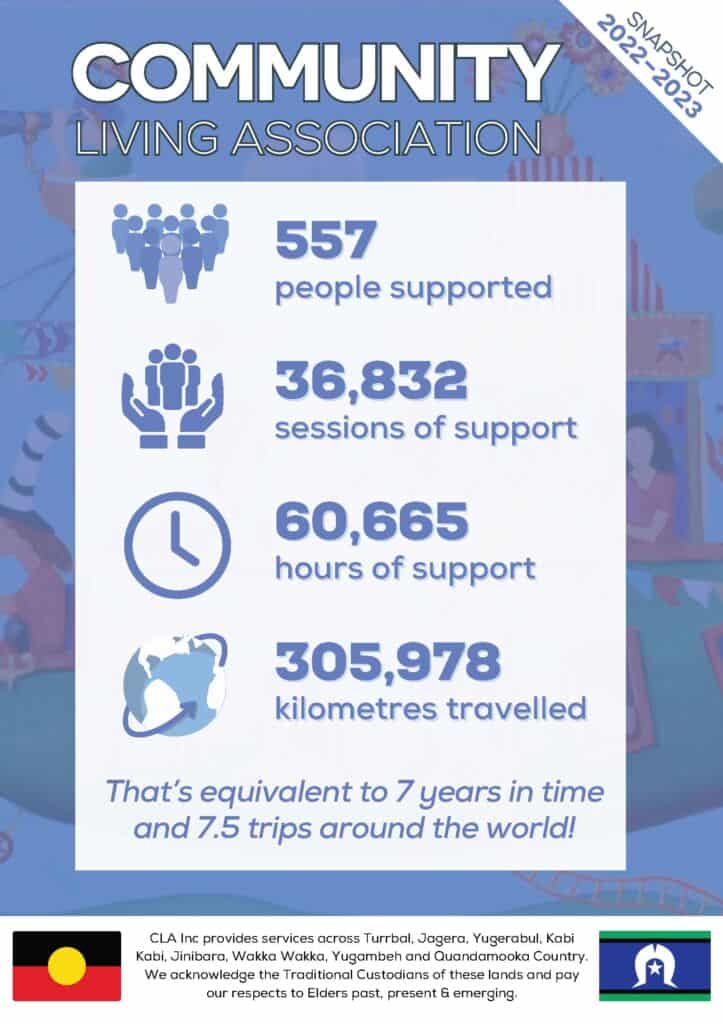
Infographic showing Community Living Association’s 2022–2023 snapshot: 557 people supported, 36,832 sessions of support, 60,665 hours of support, and 305,978 kilometres travelled. Note says this equals 7 years in time and 7.5 trips around the world.
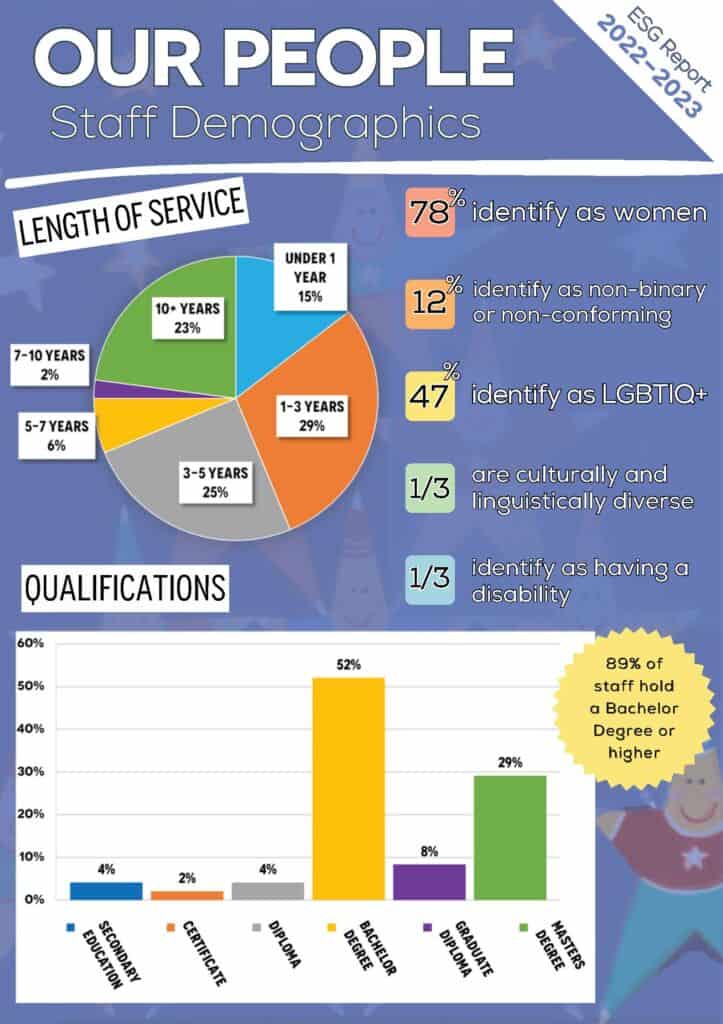
Infographic showing CLA staff demographics: length of service breakdown, 78 percent identify as women, 12 percent as non-binary or non-conforming, 47 percent identify as LGBTIQ+, one third culturally and linguistically diverse, one third identify as having a disability. Includes qualification statistics with 89 percent holding a bachelor degree or higher.
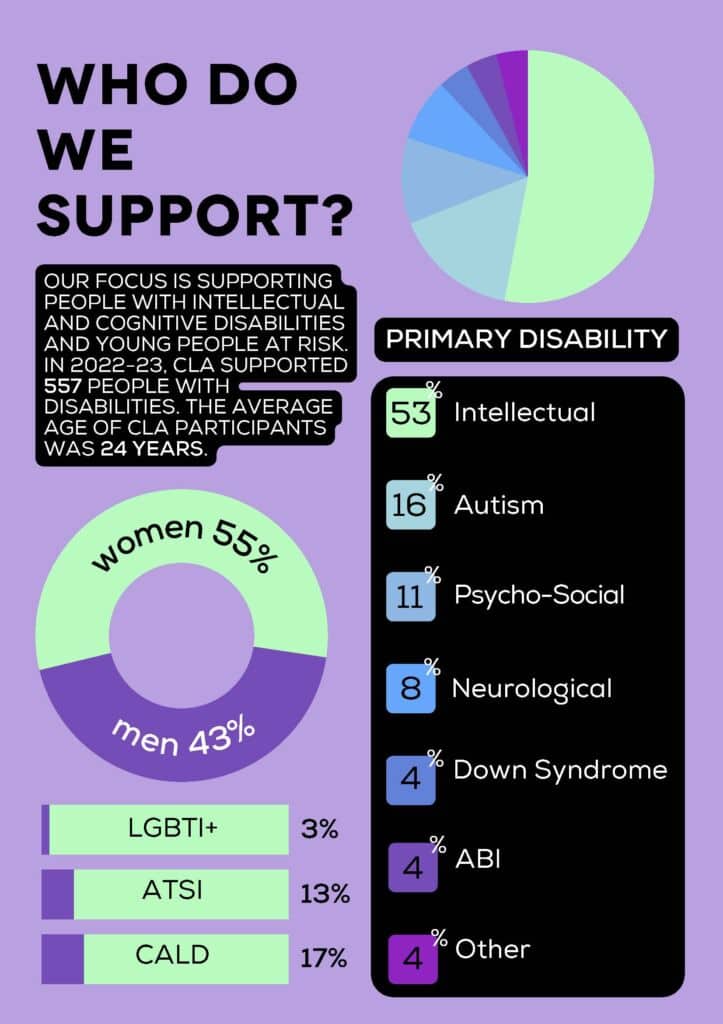
Infographic showing demographics of people supported by CLA. Highlights: focus on people with intellectual and cognitive disabilities. Donut chart shows 55 percent women and 43 percent men. Primary disability breakdown includes 53 percent intellectual disability, 16 percent autism, 11 percent psychosocial, 8 percent neurological, 4 percent Down syndrome, 4 percent ABI, and 4 percent other. Additional groups: LGBTIQ+ 3 percent, ATSI 13 percent, CALD 17 percent.
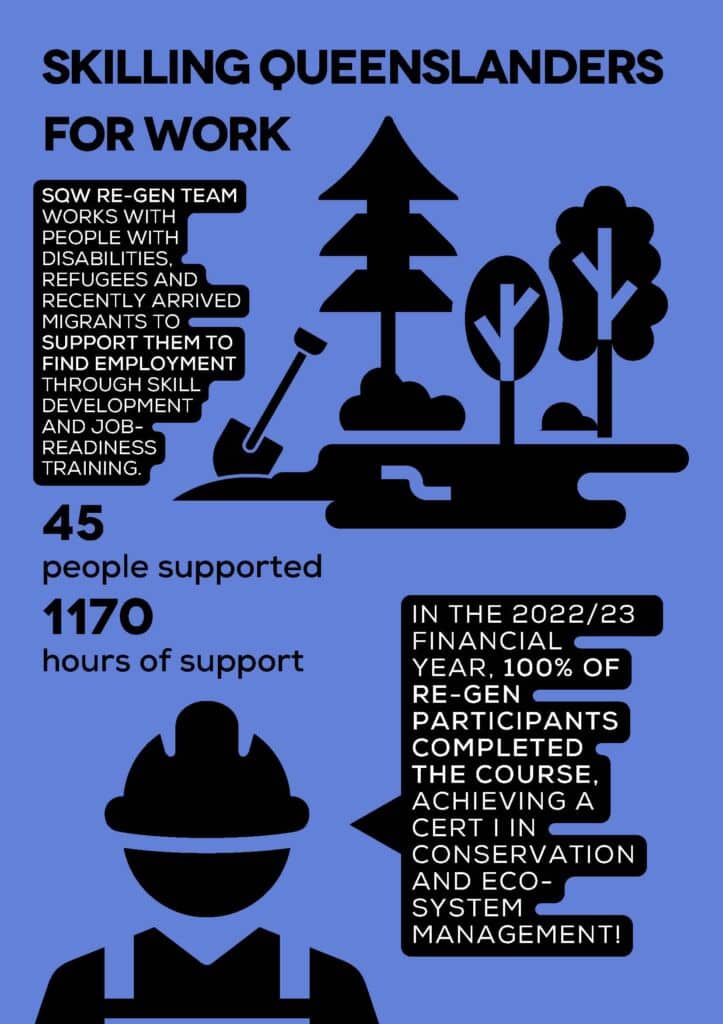
Infographic for Skilling Queenslanders for Work program. Re-Gen team supports people with disabilities, refugees and migrants to find employment. Data: 45 people supported, 1170 hours of support. States 100 percent course completion rate for participants achieving a Certificate I in Conservation and Ecosystem Management in 2022–23.
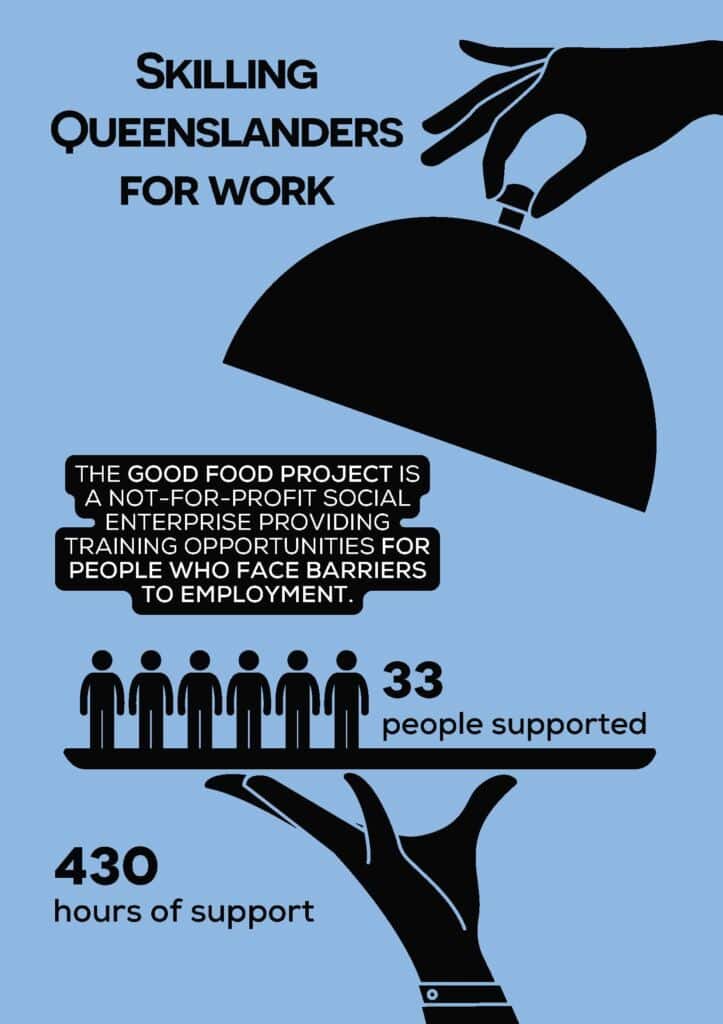
Infographic for the Good Food Project, a social enterprise providing training opportunities for people facing barriers to employment. Data: 33 people supported and 430 hours of support.
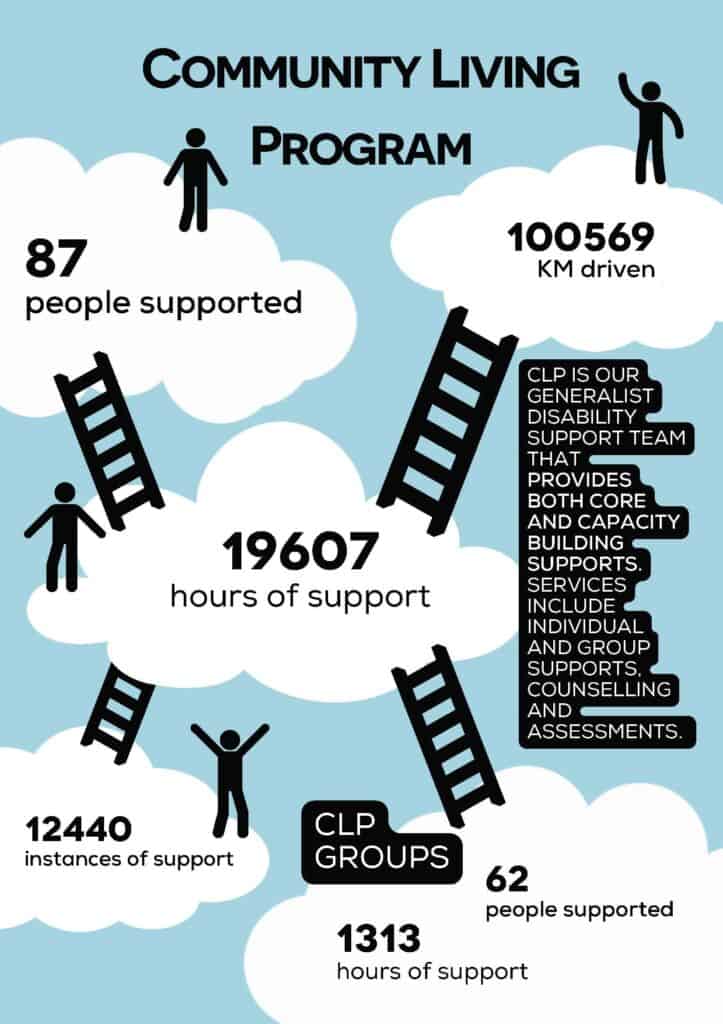
Infographic for the Community Living Program. Data includes 87 people supported, 19607 hours of support, 100569 kilometres driven, 12440 instances of support. CLP Groups section shows 62 people supported and 1313 hours of support.
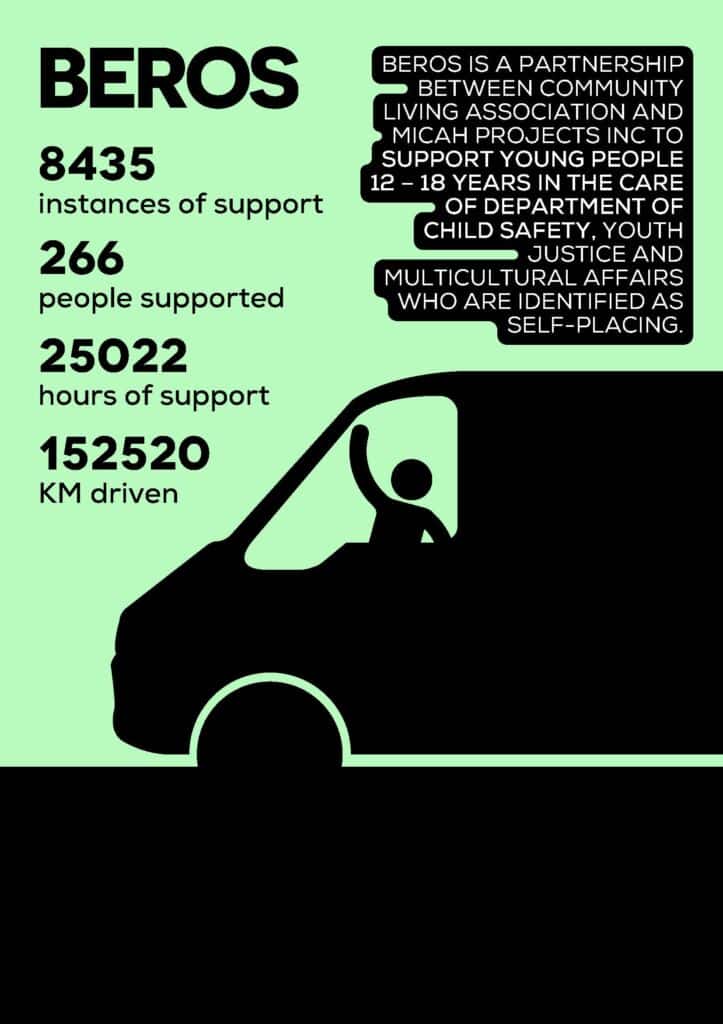
Infographic for the BEROS program supporting young people aged 12 to 18 in the care of Child Safety. Data: 8435 instances of support, 266 people supported, 25022 hours of support, and 152520 kilometres driven.
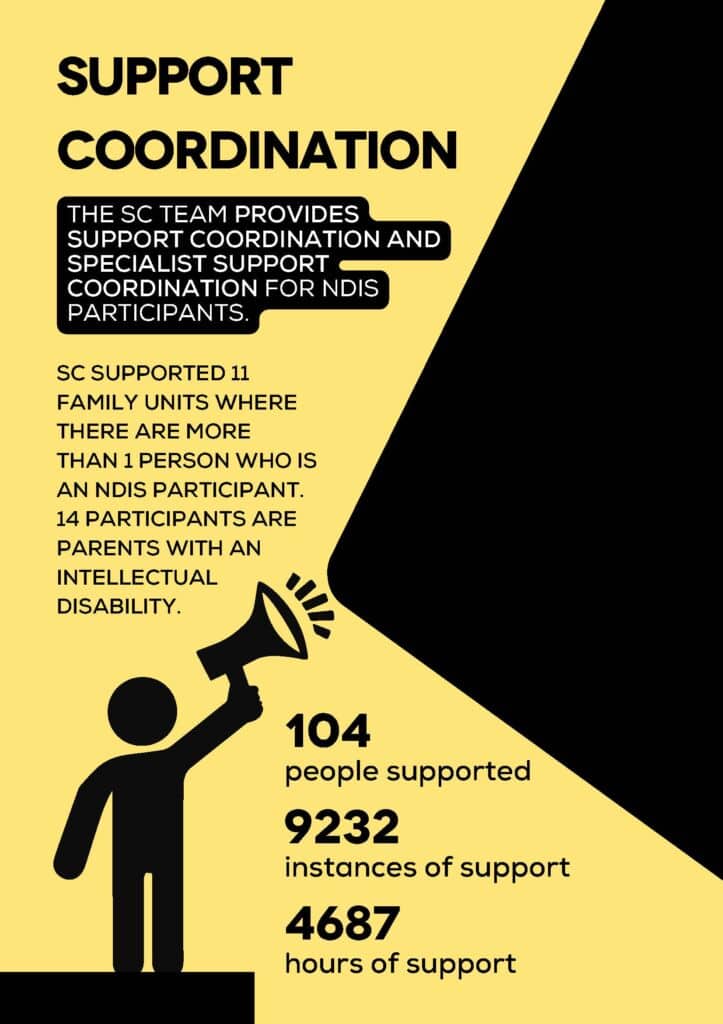
Infographic for Support Coordination showing the SC team provides support coordination and specialist support coordination for NDIS participants. Notes that 11 family units were supported, including 14 parents with an intellectual disability. Shows 104 people supported, 9232 instances of support, and 4687 hours of support, with a figure holding a megaphone.
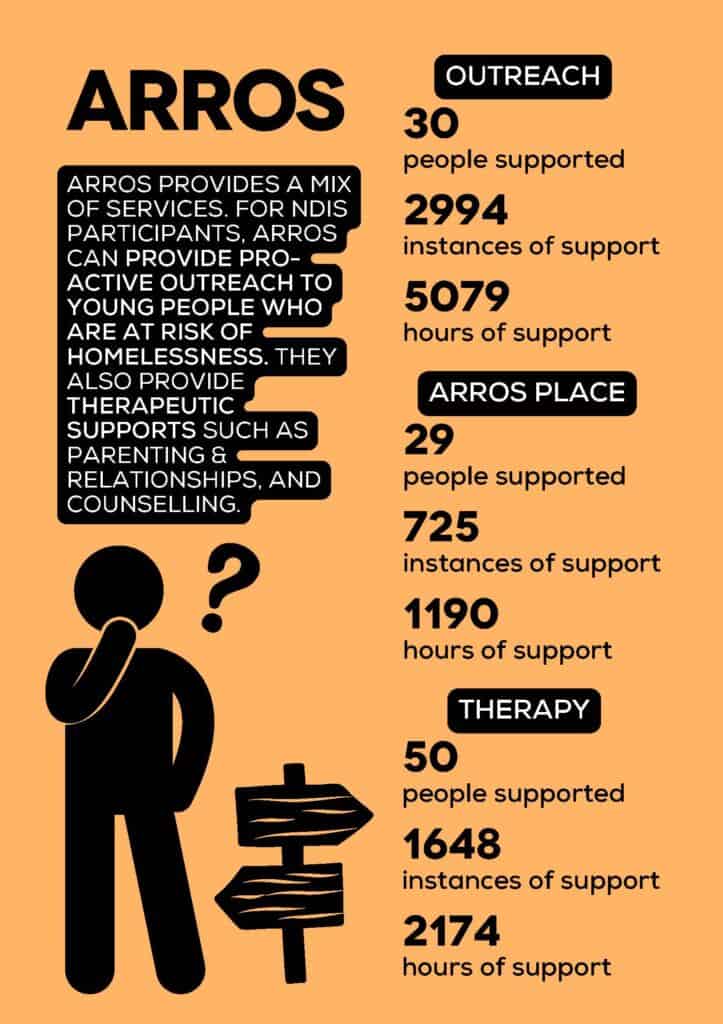
Infographic for the ARROS program supporting young people at risk of homelessness. Data: Outreach – 30 people supported, 2994 instances of support, 5079 hours of support. ARROS Place – 29 people supported, 725 instances of support, 1190 hours of support. Therapy – 50 people supported, 1648 instances of support, 2174 hours of support.
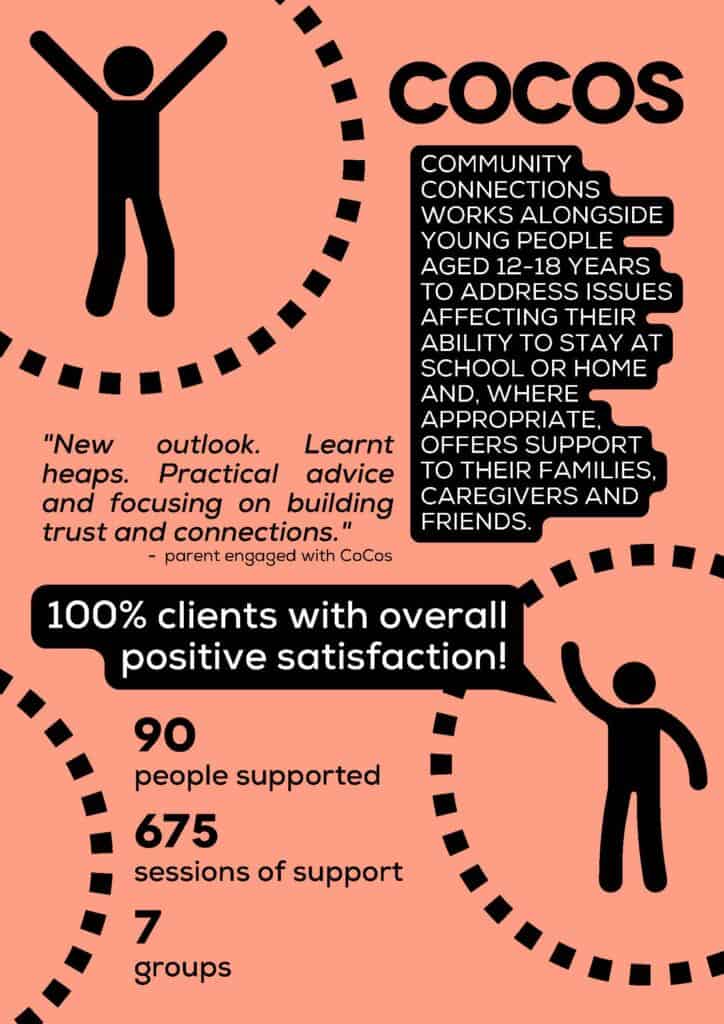
Infographic for the COCOS program supporting young people aged 12 to 18 to stay engaged at school or home. Includes feedback quote and statistics: 90 people supported, 675 sessions of support, and 7 groups. Shows 100 percent client satisfaction.

Reconnect case study

Community connections impact - wavel connect 2023

Dss Outcome Image

PARTNERSHIP is a critical ingredient used by Brisbane North Reconnect and local school staff to wrap support around vulnerable young people and stop the trajectory of youth homelessness.

School Guidance Officers like Jocelyn Pearce are often “first to know” when a young person’s housing circumstance becomes unstable. Jocelyn assists young people to connect with Brisbane North Reconnect.

In Semester 2, 2023, Jocelyn invited Brisbane North Reconnect’s to Wavell State High School to run weekly sessions, known as ‘Connection Group’, for young people living with risk of homelessness (e.g. isolation, family conflict, economic and social stressors) as well as student leaders with motivation to help others. At these sessions, Reconnect Workers listened to young people’s experiences of communication, relationships, dealing with stress, identity and reaching out for help. Young people said co-designing weekly activities gave them a say, increasing safety to speak up about concerns and learn skills to respond differently. Four months later, saying yes to an early referral for individual support with Brisbane North Reconnect was made easier for one participant because they had met the workers at the group. Normalising help, seeking and giving young people time to understand what’s important to them, helps improve family relationships, participation at school and mental health. The Connection Group sessions is an example of how creative responses foster early intervention outcomes.

“The Reconnect team has been collaborating with our school for several years. They focus on empowering young people by promoting agency, fostering independence through skill development, and, most crucially, providing a safe environment and human connection to reduce homelessness.

Young people often seek help through relationships and would never know about services like Reconnect if the team didn’t build a relationship with our support team and have an ongoing presence in the school community.

We’re thankful for our partnership with Reconnect, allowing us to offer support to young people when needed in their lives.”

Jocelyn Pearce – Wavell State High School

Contact Us

Send us a message